When Erin Whiteside watched her students interview Paralympians at the 2024 Paris Games, she saw more than a successful reporting trip. She saw years of research come to life. Whiteside, School of Journalism and Media professor at the College of Communication and Information (CCI), examines how decisions about sports coverage shape whose stories are told, whose voices are amplified and how audiences understand athletes and sports. That work became the foundation for the Paralympics Project, an immersive reporting experience that expands coverage of Paralympic sports and athletes while giving students experience on an international stage.
For Whiteside, the project represents the intersection of research, representation, and hands-on student media experience. It is an opportunity to examine how media coverage shapes public understanding of disability and athleticism while creating meaningful learning experiences for students.
Studying Representation in Sports Media
Whiteside’s research primarily focuses on sports media practices, female representation in sports media, and the social implications of sports coverage. Much of her sports media scholarship has explored women’s sports and the ways journalists determine which athletes, teams, and events receive attention.
At the center of her research is a simple but important question: Why do some stories get told while others are overlooked?
Those decisions have consequences, she said. Media coverage helps shape how audiences understand athletes and communities they may not encounter in their everyday lives. When certain groups receive little attention, opportunities to increase awareness and understanding can be lost.
Her research on women and sports media eventually led her to examine other aspects of representation in sports coverage, naturally leading her to explore the lack of media coverage across Paralympic sports.
Over time, those questions led Whiteside to examine coverage of para sports. Despite the elite level of competition and compelling personal stories, Paralympic athletes often receive significantly less media attention than Olympic athletes.
“Sports can be a vehicle for understanding deeper social issues and engaging in important social conversations,” Whiteside said.
For Whiteside, that gap presented both a research opportunity and a chance to make a meaningful impact through the Paralympics Project.
From Research to Reality
In 2022, Whiteside saw an opportunity to put her research into practice. She proposed the Paralympics Project to bring together research, immersive student learning and expanded coverage of a community often underrepresented in sports media.
The Paralympics Project offered a unique lens through which to examine larger conversations about representation, inclusion, and the role of sports journalism in shaping public perceptions, and provide CCI students the opportunity to tell stories of an underrepresented community.
“My first Games were in Pyeongchang in 2018, and the media coverage was almost nonexistent,” said Steve Emt, US Paralympic wheelchair curler. “What Erin Whiteside has done through the Paralympics Project has leveled the playing field for all Paralympians and allowed us to showcase our stories and abilities to people around the world. This has been a huge boost to the Paralympic movement.”
The need for that coverage became clear when the project took students to the 2024 Paris Paralympic Games. Whiteside observed robust international media coverage from countries including Japan and China, while US coverage remained comparatively limited. For her, the experience reinforced the opportunity for student journalists to help bring greater visibility to Paralympic athletes and their stories.
The project also augmented Whiteside’s own understanding of para sport. Working alongside students and athletes gave her a deeper understanding of adaptive sports and the nuanced classification systems that shape Paralympic competition.
During the 2024 games, her research questions about representation became real reporting assignments, giving students the opportunity to engage directly with athletes and audiences while allowing Whiteside to continue examining the role sports journalism can play in shaping whose stories are seen.
Learning Through the Paralympics
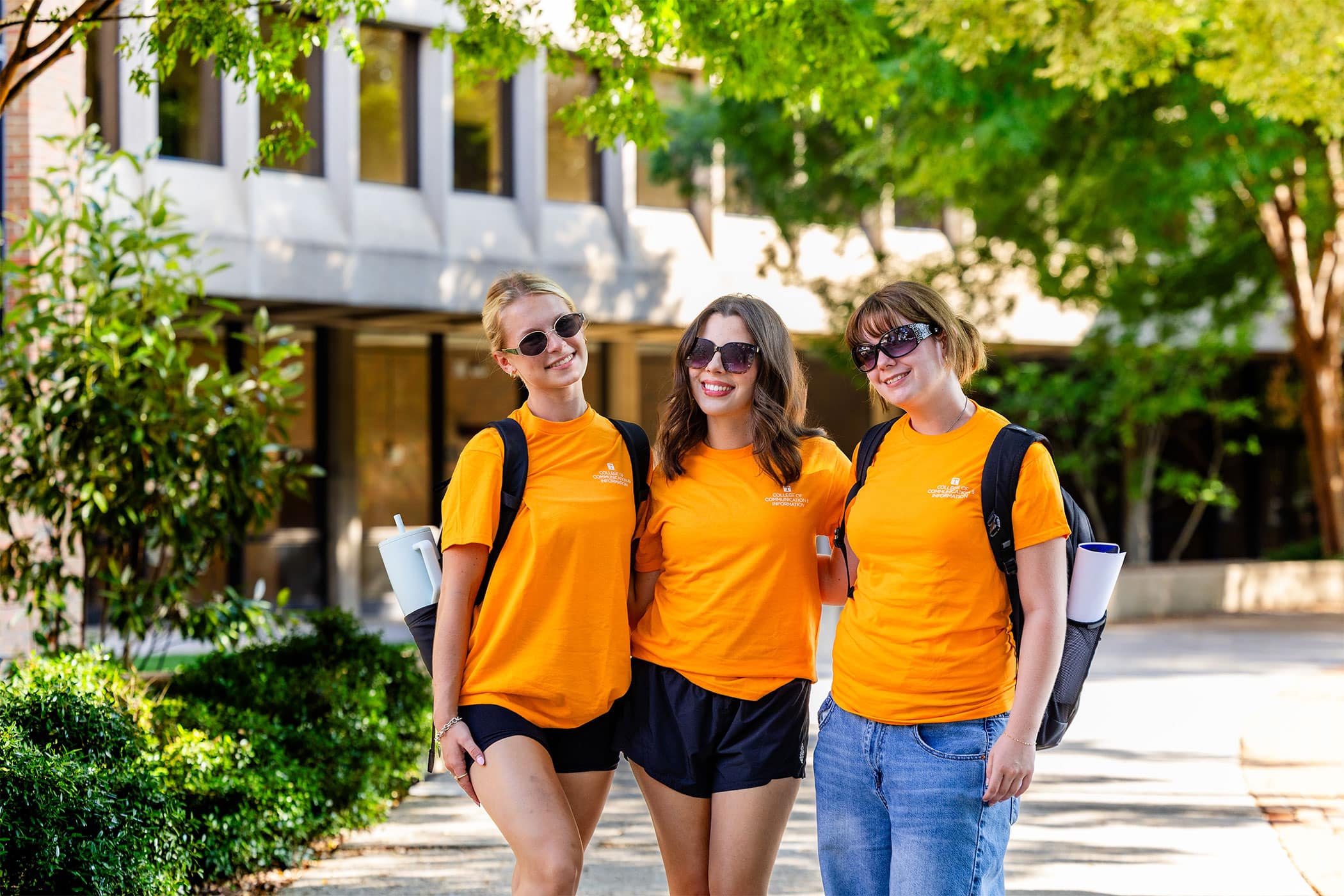
The project’s first major reporting effort took 10 students, Whiteside, School of Journalism and Media Professor Nick Geidner, and CCI PhD student Aman Misra (‘26) to the 2024 Paris Paralympic Games, where they covered the event in partnership with USA TODAY Network.
Covering an international sporting event requires students to adapt quickly to multiple venues, changing schedules, language barriers, and unfamiliar sports while simultaneously producing stories, videos, and social media content.
“Our students were working long hours and navigating the challenges of providing media support at an international event,” Whiteside said. “Despite that, their motivation to connect with the Paralympic athletes and share meaningful stories was inspiring to me.”
Students embraced the opportunity to connect with athletes, ask thoughtful questions, and tell stories beyond listing competition results. Those interactions often led to deeper conversations about disability, resilience, and representation.
Kylia Berry (’25) was a student reporter who produced multimedia coverage of the Paris Games with the USA TODAY Network.
“I was a 21-year-old student journalist sitting alongside journalists from across the country,” Berry said. “The opportunity to work alongside USA TODAY Sports as a student journalist was nothing short of remarkable. Those memories are still some of the most meaningful from my time at the University of Tennessee, and the experience helped shape the journalist and person I am today.”
From Paris to Milan and Cortina
Two years after their inaugural Paralympics experience, Whiteside and Geidner took 10 students to Milan and Cortina d’Ampezzo to cover the 2026 Winter Paralympic Games with the USA TODAY Network.
Building on the Paris experience, Whiteside prepared students to report on adaptive sports and classification systems while encouraging them to build relationships with Paralympic athletes ahead of the Games.

CCI is showing what it looks like to increase media coverage around the Paralympics the right way. By focusing on the athletes and identifying gaps in coverage, the Paralympics Project is helping drive positive growth in sports media.”
Zach Miller, US Paralympic snowboarder
For Whiteside, the Italy trip provided another opportunity to put the principles behind her research into practice.
“The work we do has to spark bigger conversations than just who won the game,” Whiteside said. “It has to be about disability, access to sports, belonging to community, and how we define who gets to be an athlete and, ultimately, who is worthy of our attention. That’s a major parallel to women’s sports and the way they’re covered in the media.”
The impact of the Paralympics Project extends beyond the stories students produce. By immersing students in Paralympic coverage, the project introduces them to careers in sports media while giving them an opportunity to contribute to greater visibility and understanding of Paralympic athletes.
“We were representing not just ourselves, but our university,” said senior Alex Carpenter, a journalism and media major who participated in the 2026 Paralympics Project. “We wanted to provide these elite-level Paralympic athletes with the coverage they deserve and be a part of the change advancing representation.”
Looking Ahead
With the Los Angeles 2028 Paralympic Games approaching, Whiteside hopes to see continued growth in coverage of para sports. She continues to research how journalists make decisions about sports coverage and how those choices influence audience perceptions.
Her work also includes collaborations with organizations focused on increasing awareness and support for Paralympic athletes, including Culxtured. Culxtured is a media collective founded by four Paralympians to reshape how the world views para sport and challenge perceptions around disability.
“Erin’s impact on bringing greater focus to the Paralympics has been tremendous and her work belongs in every university journalism program,” said Dani Aravich, US Paralympic athlete and co-founder of Culxtured. “She sets a standard for what journalism can and should be, especially as she continues to introduce new audiences to the Paralympics and elevate these stories ahead of LA 2028. It has been a huge honor and privilege to have the opportunity to work together.”
The project’s future extends beyond the Paralympic Games, with plans to create additional opportunities for students to cover para sports throughout the year.
In September 2026, Carpenter and senior Luke Lamoree spent Labor Day weekend producing photo and video content for the World Para-Cycling Games in Huntsville, Alabama, in partnership with Culxtured.
“Alex and I didn’t slow down from the moment we arrived in Huntsville,” Lamoree said. “We were able to tell so many stories that would have otherwise never come to light, and it was an incredible opportunity.”
For Whiteside, the work continues to return to the questions that inspired her research: Who gets covered, why does it matter, and how can journalism broaden perspectives?
Her research into women’s sports media informed her interest in Paralympic coverage, revealing parallels in how different bodies and forms of strength are represented in sports. Through her research and student-focused work, she hopes to broaden how audiences understand who belongs in sports.
“It’s certainly a career highlight for me to see the theoretical work put into action, and a very gratifying experience,” Whiteside said.